Fantasy Postal System Worldbuilding: How Messages Actually Travel
A believable fantasy postal system does more than explain how letters move. It shapes politics, trade, family relationships, rumors, diplomacy, and the speed at which people can react to distant events.
The easiest mistake is to build a medieval-looking world where communication behaves like modern messaging. If news can cross a kingdom in hours, that changes everything. If it takes three weeks, that changes everything too.
Start with who is allowed to send messages
Ask whether communication is public, private, or controlled. Can anyone pay to send a letter? Do nobles maintain couriers? Do merchant guilds carry correspondence with their caravans? Do temples operate trusted routes? Does the state inspect messages?
Access tells you a lot about power. A village where only the lord can reliably contact the capital lives in a different political reality from one with a cheap public post.
Decide what carries the message
Ordinary options include runners, mounted couriers, river boats, caravans, ships, relay stations, and traveling officials. Magical options might include trained creatures, enchanted tokens, dream messages, mirrors, or limited teleportation.
The important question is not which method sounds coolest. It is who can afford it, how reliable it is, and what can interrupt it.
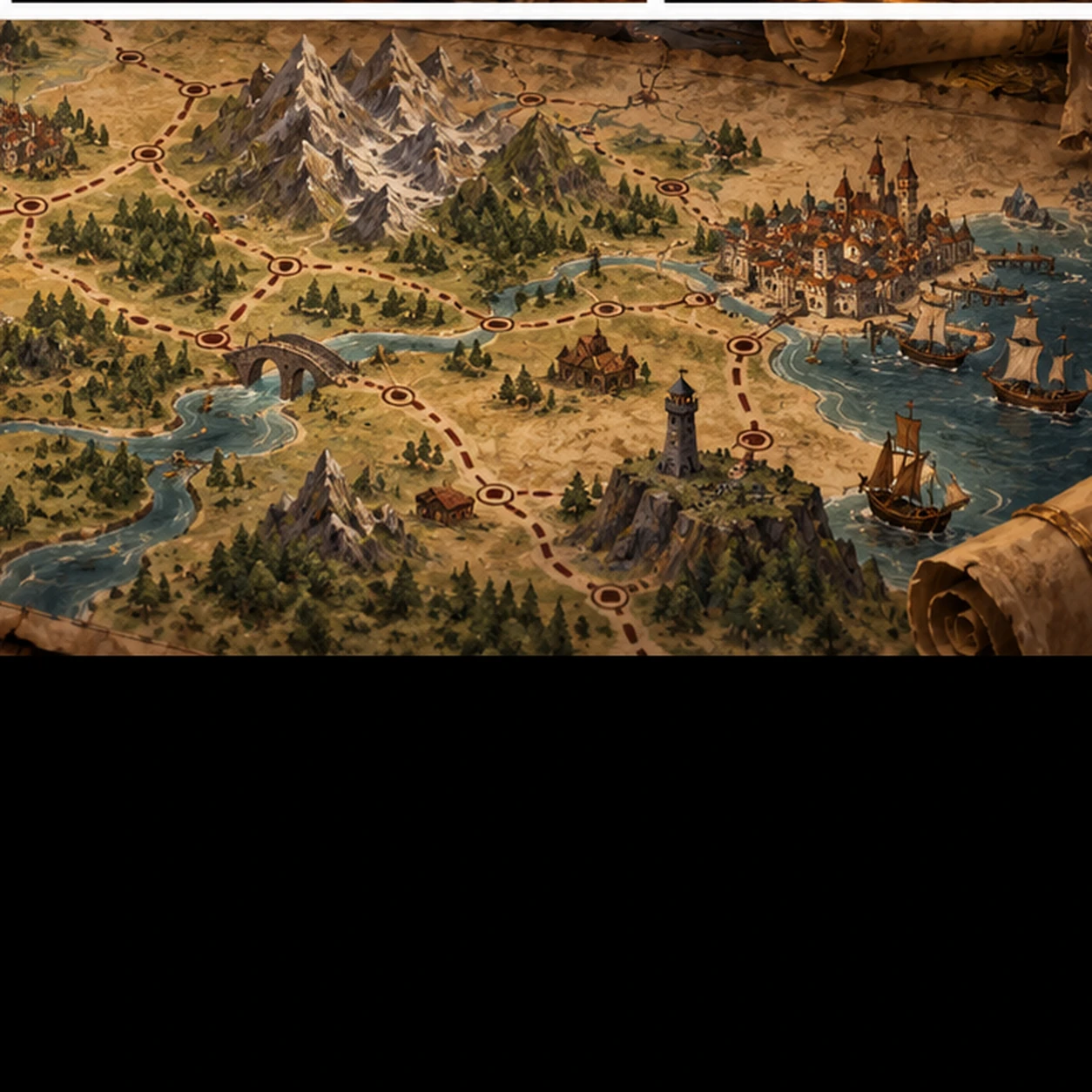
Your road network matters here. If you have not mapped that logic yet, our guide to fantasy trade routes can help you choose plausible roads, rivers, and relay points for couriers.
Give the system a travel speed
You do not need exact mileage for every route, but you should know the rough tiers. A local message might arrive the same day. A regional message could take several days. A cross-country message might take weeks.
Then decide what improves that speed. Relay horses, paved roads, river currents, magical shortcuts, and state priority can all matter. Weather, damaged bridges, border checks, banditry, floods, or political unrest can slow it down.
Build around relay points
Long-distance systems need places where the message changes hands. That creates natural worldbuilding locations: posting inns, courier houses, watch stations, harbor offices, temple depots, guild counters, or fortified road houses.
These places can become story engines. A missing courier matters because everyone knows which station should have received the packet. A forged seal matters because workers recognize the usual documents. A delayed bag of letters can affect an entire district.
Decide how people pay
Payment could be based on distance, weight, urgency, route danger, social rank, or membership. Some systems charge the sender. Others charge the recipient. Governments may subsidize official mail while private letters cost much more.
This connects naturally to your monetary system. If your setting uses complicated denominations or regional currencies, see fantasy currency worldbuilding.
Think about literacy and scribes
A postal network does not require universal literacy. In fact, limited literacy can create another profession: public scribes who write letters, read replies aloud, copy documents, and keep records for people who cannot.
That makes sending a private message harder. A secret may pass through several hands before it ever leaves town. The social consequences can be more interesting than the logistics.
Make security imperfect
How do people know a message is genuine? Wax seals, signet rings, coded phrases, witness marks, courier tokens, magical signatures, or distinctive paper can all help.
No system should be perfectly secure unless that perfection is a deliberate part of the setting. Interception, forgery, lost bags, damaged documents, corrupt officials, and false couriers all create believable friction.
Let social class change the experience
A ruler might send a priority message using fresh relay mounts and official roads. A merchant could pay a guild premium. A farmer might wait for a traveler heading in the right direction.
That difference creates a world where information itself has class. Wealthier groups react faster because they hear things sooner.
Ask what happens when magic exists
If long-distance magic is possible, do not simply replace the postal service. Decide why physical messages still survive. Maybe magic is expensive, unreliable, limited to short text, easy to monitor, or available only to trained specialists.
That can produce a layered system where urgent state messages travel magically while contracts, family letters, maps, books, and physical evidence still move by hand.
Use the post to shape plot timing
Once you know how communication works, plot timing becomes easier. A border town may spend days acting on outdated information. A court might receive three contradictory reports at once. A merchant could profit because their courier network is faster than the crown’s.
That kind of delay makes the world feel larger. Distance matters because knowledge has to travel through it.
What would a fantasy post office actually do?
A fantasy post office is more than a building full of letters. It needs a public counter, a way to record deliveries, and a route for passing messages onward. In a small town, these jobs might all belong to an innkeeper or temple clerk; in a busy capital they could fill an entire district.
- Accept: a clerk, scribe, or trusted official receives the letter and confirms where it should go.
- Price: the sender pays for the route, delivery speed, weight, or degree of privacy.
- Sort: letters are placed in pouches for specific roads, ships, temples, or courier stops.
- Transfer: each relay station marks receipt and passes the pouch to the next carrier.
- Deliver: a local messenger finds the recipient or leaves notice that a package has arrived.
- Handle failure: lost letters, missing addresses, unpaid fees, damaged seals, and disputed recipients require rules.
These mundane steps give a fictional post office characters, jobs, conflicts, and believable reasons for delay. They also answer a useful question: who can prove that a message was sent, even if it never arrived?
Example: a fantasy letter crossing a kingdom
Suppose a letter travels from a river-port merchant to a mountain-town magistrate. In this invented example, a clerk receives it on the first day. A boat carries the mail pouch upriver for three days, a wagon takes it to a mountain relay station over the next two, and a local courier needs another day to reach the magistrate. That is roughly a week under favorable conditions.
Now the river is too high for departure and a border official holds the pouch for inspection. A delay of several days becomes a plot event: the merchant misses a deadline, the magistrate acts on older information, or a rival receives the news first. The exact distances and times are yours to design; what matters is that the route has understandable stages and failure points.
Public mail, guild couriers, and royal messengers
One world can have several overlapping networks. A royal service prioritizes state business but may exclude ordinary citizens. Merchant guild couriers can reach commercial centers while ignoring remote villages. Temple messengers may be trusted with personal or sacred correspondence. A public post, if it exists, could be slower but accessible to more people.
At a border town, inspection and language differences add another layer; see our fantasy border town worldbuilding guide for the everyday consequences of crossing jurisdictions. A good fantasy postal service reflects who holds power and whose news counts as urgent.
A simple fantasy postal system template
- Access: who can send messages?
- Carrier: who or what moves them?
- Speed: how long do common routes take?
- Cost: who can afford regular service?
- Security: how are messages verified?
- Relay points: where do messages change hands?
- Failure: what commonly causes delay or loss?
A good fantasy postal system is really a model of how information moves through your world. Once you know that, politics, trade, and everyday life become easier to write.




One Comment