Roadside Shrines in Fantasy Worldbuilding: Small Places, Big History
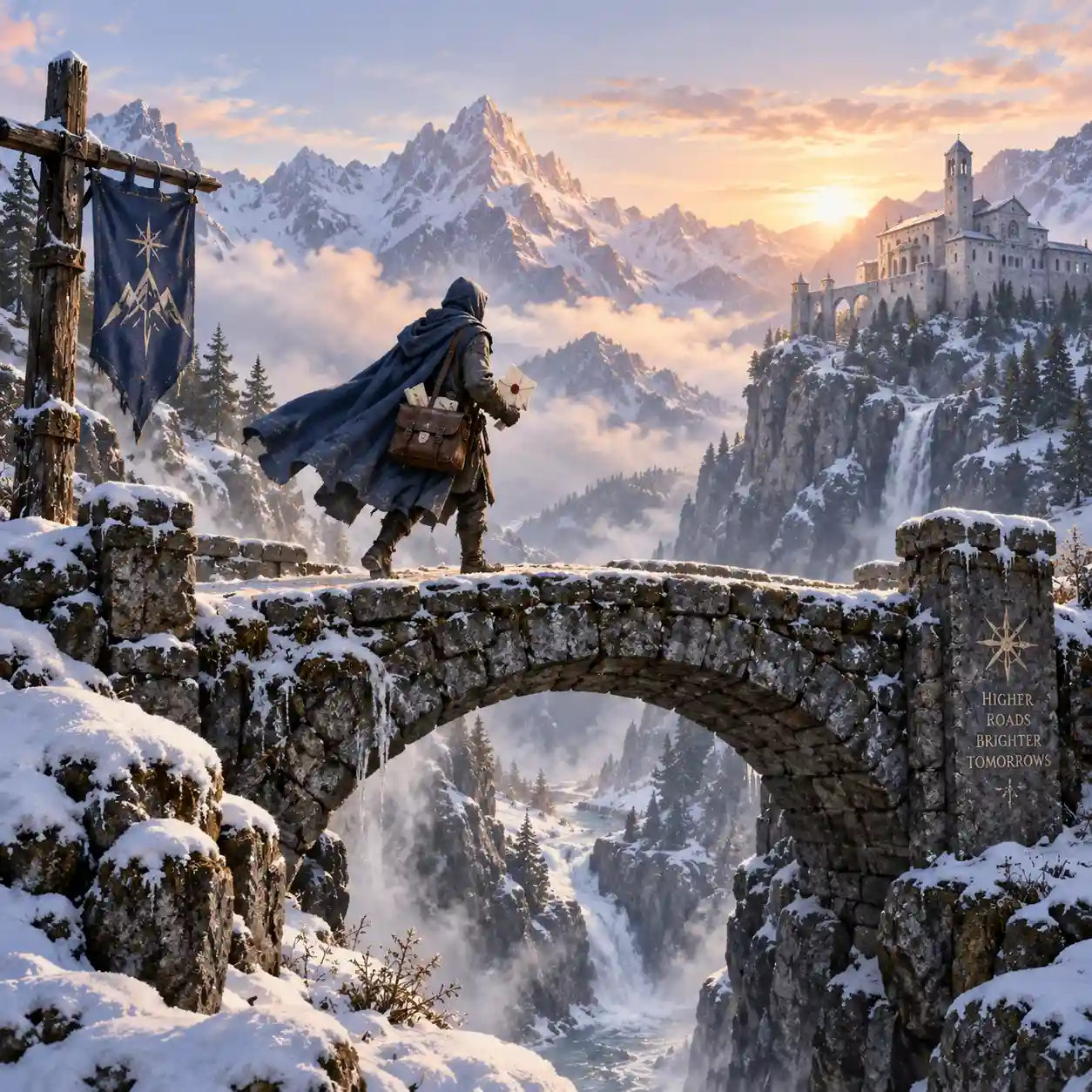
Fantasy roadside shrines are one of the most efficient worldbuilding tools available. They are small enough to appear almost anywhere, but they can reveal religion, local history, travel customs, politics, and ordinary fears in a single scene.
Start With the People Who Use the Shrine
Instead of beginning with a god, begin with visitors. Who stops here? Shepherds, merchants, soldiers, pilgrims, ferrymen, grieving families, students, or travelers crossing a dangerous pass?
The users tell you what the shrine needs to provide.
Give It a Practical Ritual
A traveler might leave a ribbon before crossing a bridge, stack a stone after surviving a mountain pass, pour out the first sip of water, or clean a lamp before continuing.
Small repeated actions make belief feel embedded in daily life.
Let Maintenance Tell a Story
A polished shrine with fresh flowers says something different from one half-swallowed by ivy. Ask who maintains it, who stopped maintaining it, and whether anyone disagrees about its meaning.
Use Shrines as Travel Landmarks
Roadside shrines naturally connect belief to movement. They can mark safe water, old boundaries, dangerous crossings, burial grounds, or the halfway point between towns.
That makes them easy discoveries in a journey using our TTRPG travel framework.
Show Cultural Layers
A new faith may repaint an older shrine. Travelers may leave offerings to two traditions at once. A local saint may have absorbed the stories of a much older river spirit.
Layering gives the setting history without requiring a lecture.
Four roadside shrine types for different journeys
Before naming a deity, decide what the structure is doing for the travelers who stop there. These invented examples can appear in a novel, on a map, or as brief tabletop discoveries.
| Shrine | Visible tradition | Story question |
|---|---|---|
| Bridge lantern | Travelers clean soot from a lamp before crossing | Who will relight it after the storm? |
| Mountain cairn | Wayfarers place one stone after a safe descent | Why does the newest stone carry a name? |
| Memorial tree | Neighbors tie ribbons remembering lost travelers | Who cares for the tree when the road moves? |
| Ferry-side bowl | Boat crews leave a token of thanks on returning | Why have the ferry crews stopped visiting? |
These are fictional local customs, not universal rules for any real religion. If drawing from living traditions, research their meaning rather than using sacred objects merely as atmospheric props.
Worked example: the lamp at Rainpass
At Rainpass, a stone alcove shelters a brass lamp. Carters traditionally refill it before the evening climb; a volunteer from the nearest village checks its glass each week. Lately the lamp has been dark. The keeper has not abandoned their beliefs: a washed-out footbridge has cut off their usual route. Travelers blame the village, villagers lack repair timber, and the innkeeper wants a different path marked before someone gets lost.
The party can deliver lamp oil, help repair access, post temporary wayfinding signs, or simply carry news of the problem. The shrine serves as a small visible record of who maintains the road. For a related practical detail, our fantasy road signs and milestones guideshows how landmarks and written directions support travelers.
Turn One Detail Into a Hook
Why are all the candles unlit? Why has someone removed every name from the memorial stones? Why are fresh offerings appearing at a shrine supposedly abandoned for generations?
The shrine does not need to become an adventure. But one changed detail can make it a useful source of rumors and questions.
Make an encounter without forcing one belief
Not every traveler should react identically. One character may stop to pay respect; another may identify the place as a memorial rather than a religious site; a third may have a different practice altogether. Let people disagree respectfully about what the landmark means. The person tasked with sweeping the steps may care most about whether visitors leave the path clear.
A simple GM procedure is to describe three things: what can be seen from the road, what an ordinary traveler does here, and which small detail is different today. Ask the players whether they stop. If they keep moving, the shrine remains worldbuilding; if they investigate, its caretaker or maintenance problem is ready for a conversation.
Season matters too. A shrine beside a snowbound pass might be inaccessible for months, while one on a busy trade road receives daily visitors. The surrounding trade-route network helps determine who leaves offerings and who notices if they stop.
A Quick Shrine Template
- Who uses it?
- What do they leave or do?
- What event or belief does it remember?
- Who maintains it?
- What has recently changed?
Answer those five questions and a patch of road becomes part of a larger culture. That is the strength of roadside shrines: they make big beliefs visible at human scale.