Fantasy City Districts: Build Neighborhoods That Generate Stories
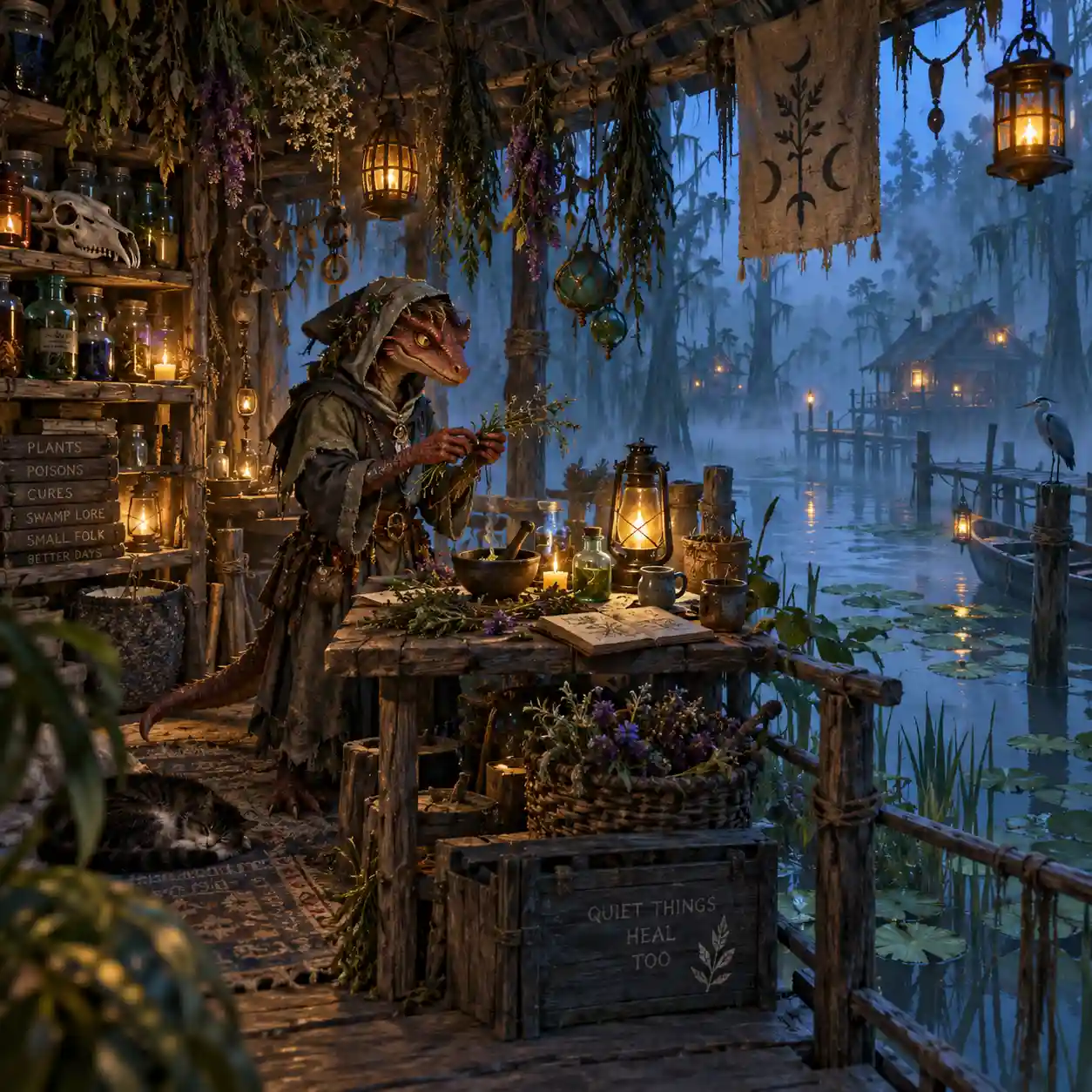
Fantasy city districts work best when they are more than labels on a map. A useful district tells you who lives there, what happens there, what people want, and what is changing.
Give Every District a Job
Start with function. What does this part of the city do? It may move cargo, house officials, process food, educate apprentices, shelter pilgrims, repair ships, or entertain travelers.
Function creates architecture. Warehouses need roads and loading space. A scholarly quarter needs booksellers, cheap rooms, food stalls, and people copying documents. A temple district needs processional routes, lodging, and public gathering places.
Add One Pressure
A district becomes playable when something pushes against its normal function. Rent is rising. A bridge is failing. A new guild is replacing old crafts. Floodwater reaches farther every spring.
Pressure creates decisions without requiring a villain.
Let History Leave Layers
Cities rarely erase themselves cleanly. Put new uses inside old structures. A market occupies a former parade ground. Workshops fill an abandoned monastery. A noble wall becomes the back side of ten crowded houses.
These layers make a place feel older than the current story.
Connect Districts Through Movement
Ask how people, water, food, waste, money, and information travel between neighborhoods. A city becomes convincing when one district depends on another.
This links naturally to our guide to fantasy trade routes. The same logic that connects kingdoms also connects streets.
Create a Three-Part District Note
For each neighborhood, write three lines:
- Purpose: what happens here?
- Identity: what makes it immediately recognizable?
- Problem: what is changing or contested?
That is usually enough to improvise locations, NPCs, and rumors without writing a city encyclopedia.
Example: The Lantern Quays
Purpose: unload river traffic and store perishable goods. Identity: blue glass lanterns burn all night along elevated walkways. Problem: a new toll has pushed small merchants toward illegal landings upriver.
From three lines you already have smugglers, officials, warehouse owners, guides, missing cargo, and political arguments.
Build for Stories, Not Completeness
You do not need twenty districts. Start with four or five that characters are likely to visit, then add neighborhoods when play or the story demands them.
A fantasy city feels alive when its parts need one another and change one another. Build districts around work, history, and pressure, and the story hooks arrive almost automatically.




3 Comments