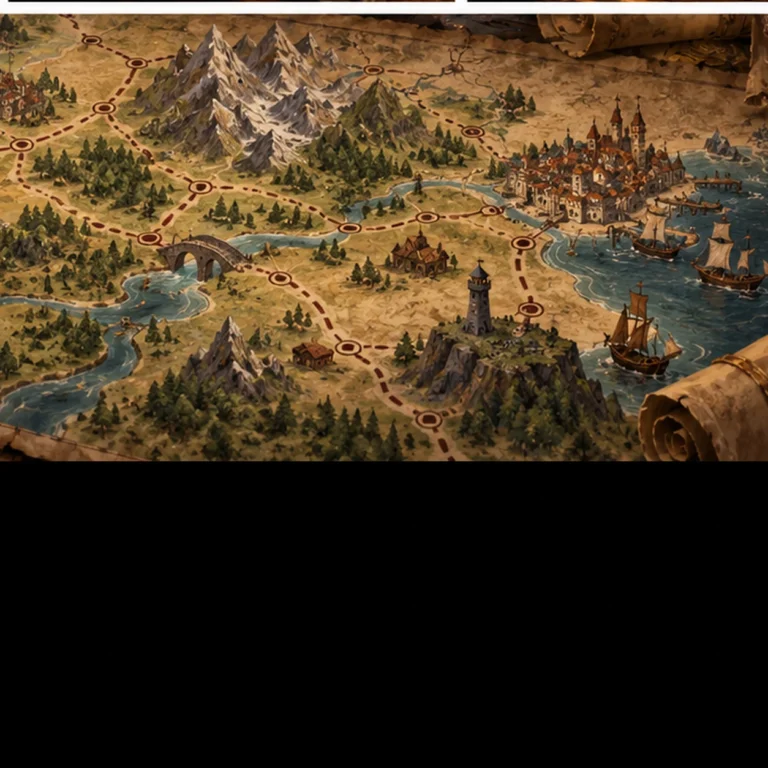
Fantasy Fishing Town Worldbuilding: Tides, Docks, and Markets
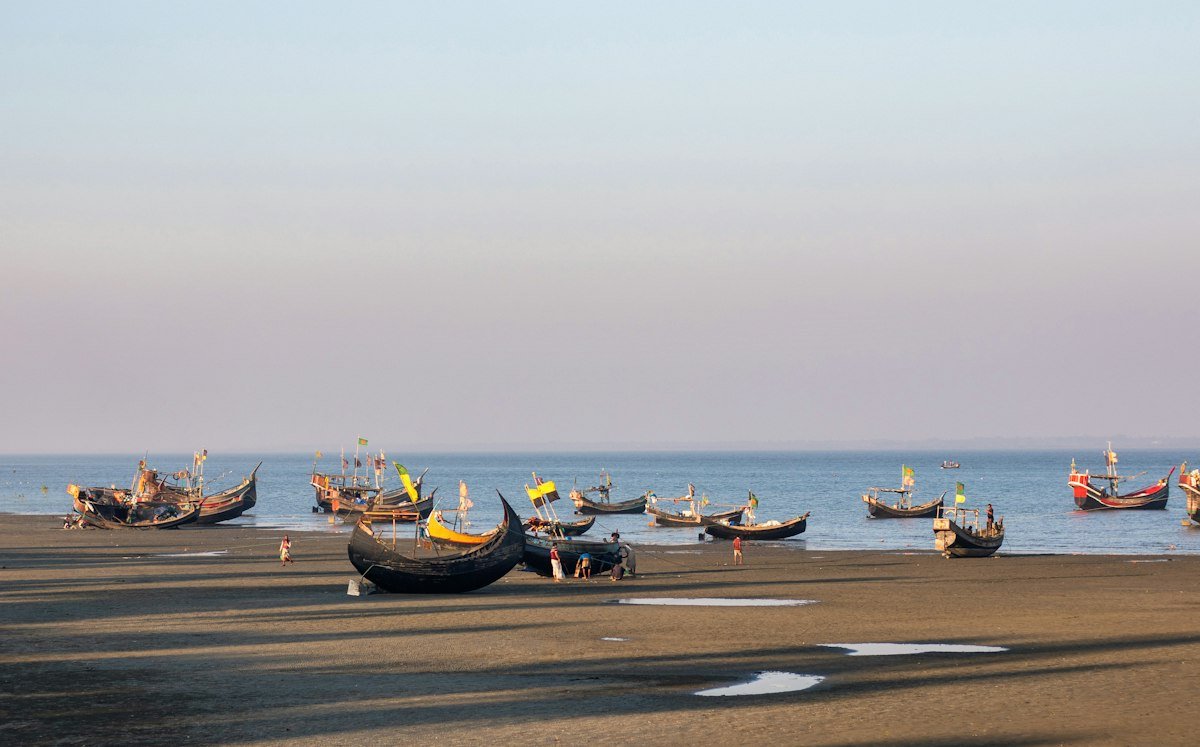
A believable fantasy fishing town starts with a practical question: how does the catch get from a boat to somebody’s dinner? Answer it and the settlement gains a working harbor, jobs, schedules, conflicts, and traditions. Tides and storms shape those answers, but so do ownership, preservation, and the distance to the next market. This guide walks through the system and ends with a ready-to-use coastal settlement.
1. Choose a shore that explains the town
A protected cove, tidal river mouth, exposed shingle beach, and rocky inlet are not interchangeable. A cove may shelter a modest fleet but have little room for large ships. A river mouth can connect fishing boats to inland buyers, while shifting sandbars make navigation harder. An exposed beach may require crews to haul small craft above the surf rather than leave them at a permanent dock.
Before adding taverns and towers, draw the shoreline, a safe landing, the approach from open water, and one route uphill. Decide where boats can wait during a storm. If the town has a huge ocean-going merchant fleet, explain why its harbor is deep enough; if it does not, small craft and seasonal visitors may be more convincing.
2. Give the tide a schedule, not just a description
Tides can change the water depth over landing steps and shallow channels. On Earth, local tidal patterns vary: some places have two high and two low tides in a day, while others differ. The NOAA explanation of tidal patterns is a useful reality check. A fantasy world with different moons can follow other rules, but its residents should be able to anticipate them.
Write a simple local rule such as: ‘Loaded boats can pass the eastern bar for roughly two hours around the higher tide.’ It is an invented planning constraint, not a universal nautical fact. That single sentence explains why a captain refuses an immediate departure, why the market opens at an odd hour, and why a delayed messenger may have to stay overnight.
3. Build a working day from departure to sale
Follow one crew. They prepare gear, depart when conditions allow, return with a catch, unload baskets, and repair equipment before the next trip. Their departure need not always be at dawn: weather, fishing grounds, boat design, and local tide windows can change the timetable. Let the harbor have a rush hour of its own.
Then follow the fish. A porter carries it to sorting tables; a seller buys the freshest portion; the rest goes to households or preservation sheds. This sequence gives a writer several natural meeting places. A witness might remember a distinctive blue basket at the scales, while a player character can learn more from a tired net mender than from the harbor master.
4. Make preservation and transport matter
Fresh catches have a limited selling window. Depending on the setting, residents may salt, dry, smoke, pickle, or otherwise preserve part of the harvest. These methods need supplies and labor: salt, fuel, clean surfaces, barrels, storage rooms, and people to maintain them. A magical cold room may help, but who owns it, how much does access cost, and what happens when it fails?
A town that sells only to local households behaves differently from one sending preserved fish along a road. If the catch travels inland, connect it to market-day rules and bargaining. If barges carry it upriver, seasonal river conditions can explain delays and changing prices.
5. Name the jobs that keep boats afloat
Fishers are only one part of the economy. Net makers, rope sellers, sail menders, boat carpenters, barrel makers, porters, fish cleaners, cooks, and traders may all rely on the waterfront. Someone also settles disputes over landing space, measures the catch, maintains the quay, and collects whatever dues the settlement recognizes.
Pick three recurring workers with competing priorities. The boatwright wants a repair slip kept clear. The fish seller wants boats to unload quickly. The ferry keeper wants the same landing at the busiest hour. None has to be a villain; their overlapping schedules create believable friction. This approach also prevents every named NPC from being a captain or innkeeper.
6. Decide who owns the waterfront
A harbor may belong to the town council, a noble family, a guild, or several households that share access by custom. Ownership shapes docking fees, repair obligations, and whose boat gets priority. Ask whether visiting crews can sell directly, whether outsiders pay a landing charge, and how disputes are heard. These are small rules with large story consequences.
A wealthy merchant might own the only secure smokehouse without owning the boats. A cooperative of fishing families could bargain collectively over prices. The town might reserve one landing for rescue craft. Show these arrangements in action through a queue, a posted notice, or a conversation at the scales rather than through an encyclopedia paragraph.
7. Let storms change the economy, not merely the scenery
A storm means lost work, repairs, unsafe crossings, and sometimes spoiled goods. A string of bad sailing days can increase debt even if nobody is physically injured. Conversely, an unexpectedly large catch can overwhelm the available buyers and preservation space. Weather affects different households differently: an established owner may wait while a new crew cannot afford another idle day.
Give the town a modest safety net. Perhaps a communal store provides grain, a temple serves hot meals, or the council hires idle crews to repair roads. A neighboring food-storage system can determine how long that assistance lasts. Such institutions give residents agency rather than making every hardship a cue for outside heroes.
8. Create a culture from repeated work
Traditions feel rooted when they answer a recurring need. A painted marker may record the worst storm tide anyone remembers. A shared meal might celebrate the first safe voyage after winter. Families may pass down channel names, repair songs, or rules about helping a boat in distress. Choose one or two customs and show who follows them, who questions them, and what they cost.
Avoid treating fishing people as interchangeable weathered storytellers. A newcomer saving for a boat, a retired navigator teaching children, and a merchant trying to fund a larger curing shed will have different hopes. Their ordinary ambitions are what make the place worth revisiting after the adventure ends.
Worked example: Gullhaven at low tide
Gullhaven has forty fishing households, a sheltered cove, and a shallow eastern channel. Loaded boats can cross its bar only near the higher tide. The morning market stands above the beach, while a narrow path carries baskets to three smoking sheds. The largest shed belongs to Merchant Vessa, who charges for storage. A public landing is kept free for rescue boats, but visiting traders often ignore the painted boundary.
One afternoon a royal courier demands immediate passage. The channel is too shallow, and a rough sea makes the outer route dangerous. Meanwhile, a generous catch has filled every shed, and Vessa raises her storage fee. The characters could arrange a smaller boat, help preserve fish until the evening tide, negotiate with Vessa, or take a slower road. The setting supplies meaningful choices without forcing a fight or a single correct solution.
A six-question fishing town worksheet
- What protects boats when the weather turns?
- When can a loaded vessel enter and leave?
- Where is the catch sorted, sold, and preserved?
- Who owns the most valuable landing or storage space?
- Which job continues when boats cannot sail?
- What one seasonal custom comes from the town’s work?
Frequently asked questions
Does every fishing village need a dock?
No. Small boats can use a beach, slipway, or natural landing. The design should fit the vessel sizes, shoreline, and amount of trade you imagine.
How precise do fantasy tides need to be?
Precise tables are unnecessary unless a plot depends on minutes. Establish a consistent pattern and let residents plan around it. If a crucial crossing occurs at low water, foreshadow that limitation earlier.
What makes a fishing town feel alive in one scene?
Show one ordinary task interrupted by a competing need: a fish seller waiting for scales, a boatwright demanding room to work, or a family rushing to preserve the catch before rain. The resulting choices reveal the settlement more naturally than a long scenic introduction.