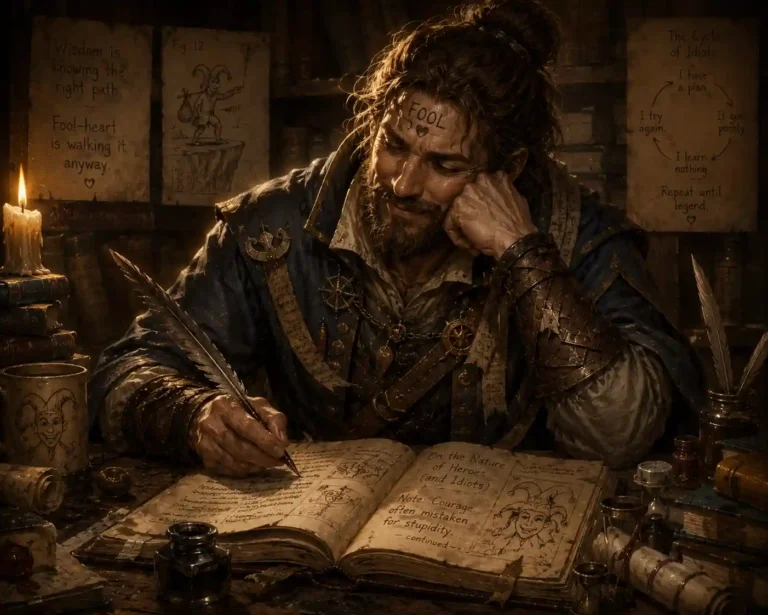
D&D Guild Dispute Recap: A No-Combat Session Example

This D&D guild dispute recap shows how to summarize a social session without turning it into a list of conversations. The party must decide whether an apprentice’s contract is valid after a workshop closes. Nobody has to draw a sword. The stakes come from a deadline, competing interpretations of an agreement, and the relationships that change when the characters choose a side.
The fictional session below can be adapted to many tabletop fantasy games. It is written as a model for a campaign log, with a short read-aloud recap at the end and GM notes that explain how to keep player choices visible. No specific edition’s ability-check rules are required.
The setup: a guild hearing before the winter bell
The party arrives in Alderwick to repair a road bridge before the first hard freeze. The only licensed bellcaster able to replace its warning bell has lost access to the guild furnace after a fire. Her apprentice, Tessa, knows how to complete the work, but the guild refuses to recognize her final year of training. Without a guild seal, the town council cannot legally pay her for the job.
The characters have two days before the road closes. They can negotiate a temporary license, find a different craftsperson, help Tessa demonstrate her skill, or convince the council to accept responsibility for an exception. Each solution benefits someone and creates a cost elsewhere. The GM’s preparation is a situation, not a preferred verdict.
Session beat 1: the party hears two credible stories
At the guild hall, Master Velan insists that apprentices must finish their contracted term under a licensed supervisor. The rule protects customers from dangerous work. Tessa argues that she completed four years of training and supervised repairs during last spring’s flood. Her former master’s workshop burned before her final assessment, and a rival now wants her to start again.
The party asks to see the contract rather than immediately endorsing either side. The document promises five winters of instruction and an examination, but it does not specify what happens when a master can no longer teach. That gap is the central conflict. The recap records the party’s investigative choice because it creates a new route forward.
Session beat 2: evidence comes from ordinary work
One character interviews the river-watch captain, who confirms that Tessa helped repair the alarm mechanism during the flood. Another visits the damaged foundry and learns that its master had already signed a letter recommending her examination. The letter is stained but legible. A third character speaks to the guild treasurer, who worries that recognizing incomplete terms will let wealthy patrons buy licenses for untrained relatives.
No single witness is lying. The facts support different priorities. The party now knows that Tessa has relevant experience, the guild’s safety concern is real, and the original agreement failed to anticipate the fire. Record these as established facts; the party’s belief that the treasurer is acting out of jealousy remains an interpretation, not confirmed truth.
Session beat 3: a compromise is offered and rejected
The characters propose a supervised practical test, paid for by the town council. Master Velan agrees in principle but wants the test delayed until a qualified examiner returns next month. That would leave the bridge warning bell broken during the freeze. Tessa refuses a temporary license that requires her to surrender credit for the work to a master who did not train her.
The rejection is not a dead end. It reveals what each participant considers nonnegotiable: safety, timing, and professional recognition. The party has new leverage because the watch captain can testify about Tessa’s past repairs and the council can accept liability for an emergency exemption.
Session beat 4: the characters choose a public test
The group persuades the council to hold a public examination using a smaller bell from the market tower. The guild may inspect the finished work; the watch captain will observe; the council will pay for materials whether the result succeeds or fails. Tessa agrees because the assessment will carry her name, not someone else’s. The characters arrange tools and witnesses instead of rolling a single persuasion check to resolve every concern.
During the test, a cracked mounting pin threatens to delay completion. The party could secretly replace it, but Tessa notices the flaw and insists on documenting the repair. This costs precious time. The players support her decision, accepting that the bridge may stay closed another day. The resulting bell passes inspection, but the town still needs to arrange a safe temporary warning system.
Session beat 5: the verdict solves one problem, not every problem
Master Velan signs a limited license recognizing Tessa’s examination. The guild treasurer adds a requirement that future emergency assessments use two independent witnesses. The council agrees to fund a temporary signal at the bridge until the new bell is installed. The party gains Tessa as an ally, while some guild members believe the council interfered with trade rules.
The result is a partial victory. The party did not overthrow the guild, and Tessa did not receive unlimited permission to practice every craft. The immediate bridge problem has a credible path to resolution. The new policy creates a future political issue without undoing the characters’ accomplishment.
Read-aloud recap for the next session
“Last time in Alderwick, you arrived to find the bridge’s warning bell broken and its only available repairer caught in a guild dispute. You examined Tessa’s apprenticeship contract, found evidence of her flood-season repairs, and convinced the council to host a public test. When a damaged pin threatened the result, you supported Tessa’s decision to report the flaw rather than hide it. She earned a limited guild license, and the town promised temporary warning signals while the new bell is installed. Master Velan has signed the ruling, but the guild treasurer is already drafting stricter rules. At dawn, a messenger arrives from the bridge: the river has begun to freeze earlier than expected. What do you do?”
What to preserve in the campaign log
A campaign log should keep information that will affect future play. For this session, record the signed limited license, the council’s promise to provide temporary signals, and the party’s relationship with Tessa. Also record the treasurer’s proposed policy as an intention, not a law already passed. The players might oppose it, support it, or ignore it.
| Category | Player-facing note |
|---|---|
| Confirmed fact | Tessa passed a public practical examination. |
| Party decision | The party supported a transparent repair instead of concealing a flaw. |
| New ally | Tessa is willing to help with future metalwork. |
| Open obligation | The council still owes the bridge a temporary warning system. |
| Unresolved issue | The guild treasurer wants stricter emergency-license rules. |
How to run this without railroading
Prepare what the three institutions want, what evidence exists, and what happens if the party does nothing. Do not require the characters to choose a public examination. They might hire a traveler, repair the warning mechanism themselves, persuade the council to close the bridge, or argue for a different contract interpretation. If they bypass the guild, record who objects and whether the solution still keeps travelers safe.
For social checks, use the rules of your system and the fiction of the conversation. A successful check can earn a meeting, soften a demand, or clarify terms; it need not erase a faction’s established interests. Let concrete offers and evidence change the options. Failure can cost time or trust while leaving another avenue open.
Five-line recap template for your own campaign
- Starting problem: The party arrived at ___ because ___.
- What they learned: Evidence from ___ established ___.
- Choice that mattered: Instead of ___, they decided to ___.
- What changed: ___ now owes, trusts, or opposes ___.
- Next question: With ___ unresolved, what will the party do?
Write the short recap after the session while the decisions are fresh. If the party spent an hour debating a point that changed nothing, it may not belong in the read-aloud version. Conversely, a quiet promise made in the final minute deserves a place if someone will act on it later.
Frequently asked questions
Can a D&D session recap focus entirely on social encounters?
Yes. A recap tracks consequential decisions, not the number of fights. A contract, new ally, or public ruling can alter a campaign’s direction as strongly as a combat victory.
Should the recap include secret GM motives?
No. Share only what the characters learned or reasonably inferred. Keep hidden motives in separate GM notes so a recap does not spoil an investigation or make a rumor sound confirmed.
Related Kobold’s Rest guides
Build the institution with our fantasy guild apprenticeship worldbuilding guide, plan competing offers with TTRPG faction negotiation examples, and keep shared notes accurate with player-facing campaign notes without spoilers. For another quieter session structure, see a no-combat session recap example.
The essential question for every recap is not “What happened?” but “What do the characters now know, owe, and have the power to change?” Answer that, and the next session has somewhere meaningful to begin.