D&D Campaign Log Example: The Lanterns of Blackfen, Session One
A good campaign log should help everyone remember what mattered without reading like a minute-by-minute transcript. The best recaps keep the choices, discoveries, strange NPCs, and consequences that give a session its shape.
This is a sample campaign log written in a story-forward style. The adventure is fictional, but the format is designed to be easy to borrow for your own table.
Campaign Log at a Glance
Setting: Blackfen, a marsh village built on old stone causeways.
Session goal: Find out why the village lanterns have begun going dark before midnight.
Main mystery: A bell can be heard beneath the marsh even though the old chapel bell was removed generations ago.
Important NPCs: Mara Venn, the innkeeper; Old Pell, the ferryman; and Tovin Reed, a young lamp-lighter who insists the lights are not simply going out.
Arrival at Blackfen
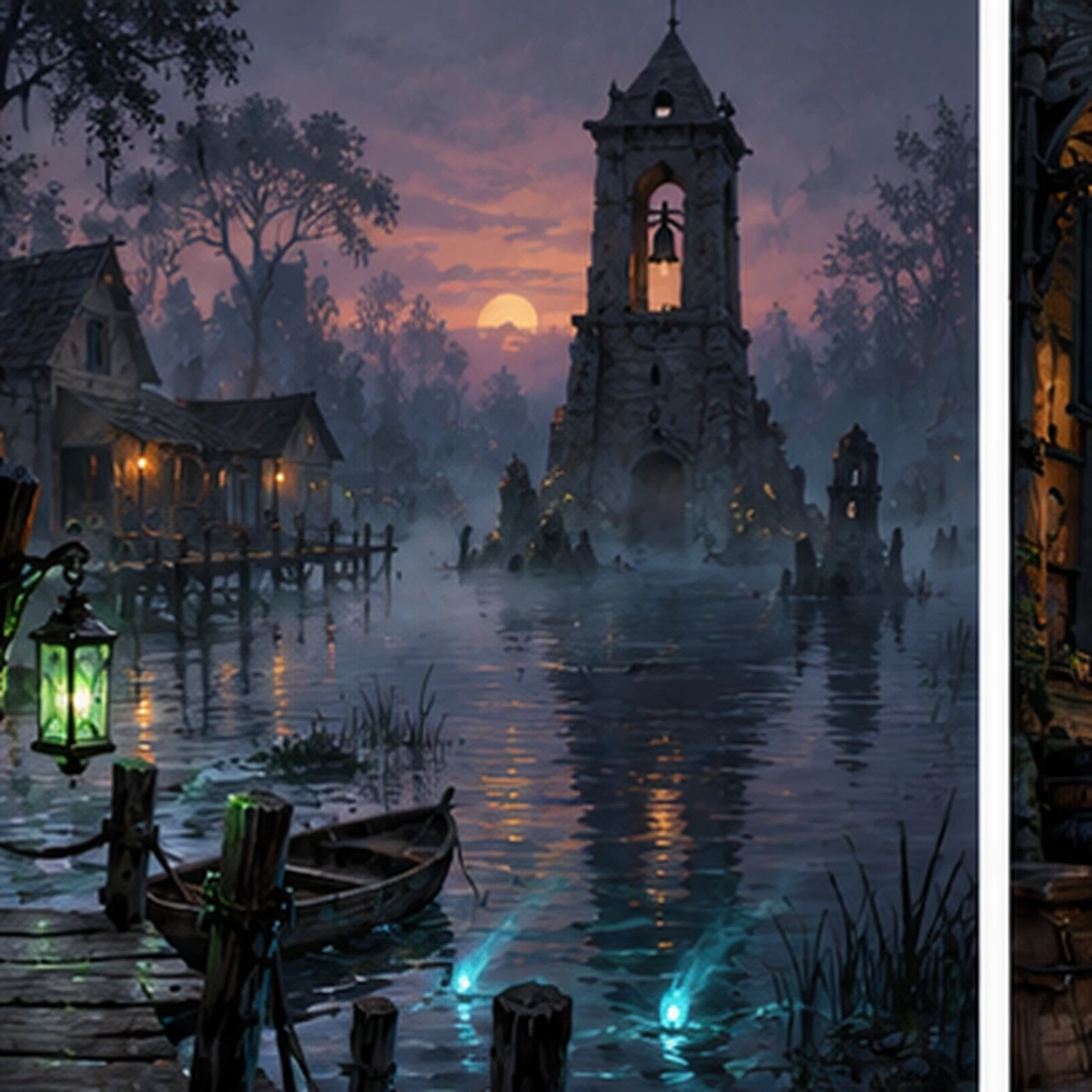
The party reached Blackfen late in the afternoon, when the marsh water looked almost silver beneath a low sky. The road narrowed into a raised stone path, and the village appeared in pieces: a crooked roof through reeds, a leaning watchtower, then a row of homes with green glass lanterns hanging beside their doors.
At first, Blackfen seemed ordinary enough. People were closing shutters, bringing baskets inside, and calling children home before the fog thickened. Then the party noticed that every doorway had two hooks for lanterns, but only one lantern remained.
Mara Venn explained the missing lights over bowls of stew at the inn. For six nights, one lantern somewhere in the village had gone dark before midnight. When someone went to relight it, the lantern was empty. No oil. No wick. No broken glass. The entire inner mechanism had vanished.
The oddest detail came from Tovin Reed, the lamp-lighter. He said the lanterns did not flicker out. They turned blue for a moment, and then the light folded inward like someone closing a tiny door.
The First Clue: A Rumor That Does Not Fit
Instead of sending the party directly to the latest darkened lantern, Mara offered three local explanations. Some villagers blamed marsh gas. Others blamed smugglers. A few whispered that the old chapel bell was calling its lights back.
That third rumor made no sense because Blackfen had no chapel bell.
Or, at least, it had no bell now.
Old Pell, the ferryman, remembered the story differently. He claimed the bell had not been removed. According to him, the chapel sank during a flood nearly eighty years ago, taking the bell with it. The village rebuilt farther uphill and stopped talking about the ruins.
This gave the party a choice: investigate the most recent lantern, search the chapel ruins, or question Tovin more closely. They chose the lantern first.
The Empty Lantern
The latest lantern hung outside a narrow house at the edge of the village. Its glass was intact, but the metal base felt unusually cold. A careful search found a thin line of dried grey mud beneath the hook.
The same mud appeared on the stones below, forming three small drops that pointed away from the house.
The trail did not continue across the road. Instead, it ended at a drainage channel that carried rainwater toward the marsh.
That was the moment the session changed from a village mystery into something stranger. The party had expected a person taking the lantern parts. The evidence suggested something had moved through the water.
If you are designing a similar mystery, this is where an interesting TTRPG location can do part of the storytelling for you. The marsh was no longer background scenery; it had become a route, a hiding place, and a clue.
The Bell Beneath the Water
At dusk, the party followed the drainage channel toward the old chapel site. Old Pell reluctantly agreed to take them part of the way by flat-bottomed boat, but he refused to cross a line of white reeds.
Beyond those reeds, the water became strangely calm.
The party continued along a half-submerged stone path until they found the top of an old arch just above the surface. Beneath it, something glowed faintly blue.
Then the bell rang.
It was not loud. That made it worse. The sound seemed to come through the water rather than across it, a low note that the party felt through the stones under their feet.
Every lantern in Blackfen went dark at once.
What the Players Chose
The party could have rushed toward the glow, returned to warn the village, or tried to understand the old chapel before going farther. They chose caution.
One character marked the stone path so they could find it again in thicker fog. Another studied the arch and realized it was not part of the chapel entrance at all. It was the top of a bell tower.
The chapel had not simply sunk.
The whole structure had somehow settled upright beneath the marsh.
Before they could investigate further, a small green light appeared under the water. Then another. Then another. Seven lights moved in a slow line beneath the surface, heading toward the submerged tower.
The stolen lantern flames had not been extinguished. They had been collected.
End of Session: The Choice for Next Time
The session ended with three clear leads:
- Find records explaining why the original chapel sank.
- Follow the moving lights into the submerged bell tower.
- Question Old Pell about why he knew exactly where to stop the boat.
Ending on a choice gives the next session immediate momentum. It also lets players think between games about what they want to pursue.
Why This D&D Campaign Log Format Works
A readable campaign log does not need every roll, every joke, or every line of dialogue. It needs the pieces that will matter later.
For each session, try recording five things: the opening situation, the strongest clue, the biggest player decision, one memorable NPC detail, and the unresolved question at the end. That is usually enough to rebuild the session in everyone’s memory.
You can also keep a separate list of rumors and leads. The same basic idea also works when building a TTRPG rumor table: every piece of information should point toward a choice instead of simply adding lore.
A Simple Campaign Log Template
If you want to turn your own notes into a campaign log, use this structure:
- Where did the session begin?
- What changed?
- What clue or discovery mattered most?
- What did the players decide?
- What consequence followed?
- What question is still open?
That keeps your recap useful for players while still giving it enough story to be fun to read months later.
One Comment