Fantasy Library Catalogs: Access, Archives, and Lost Books
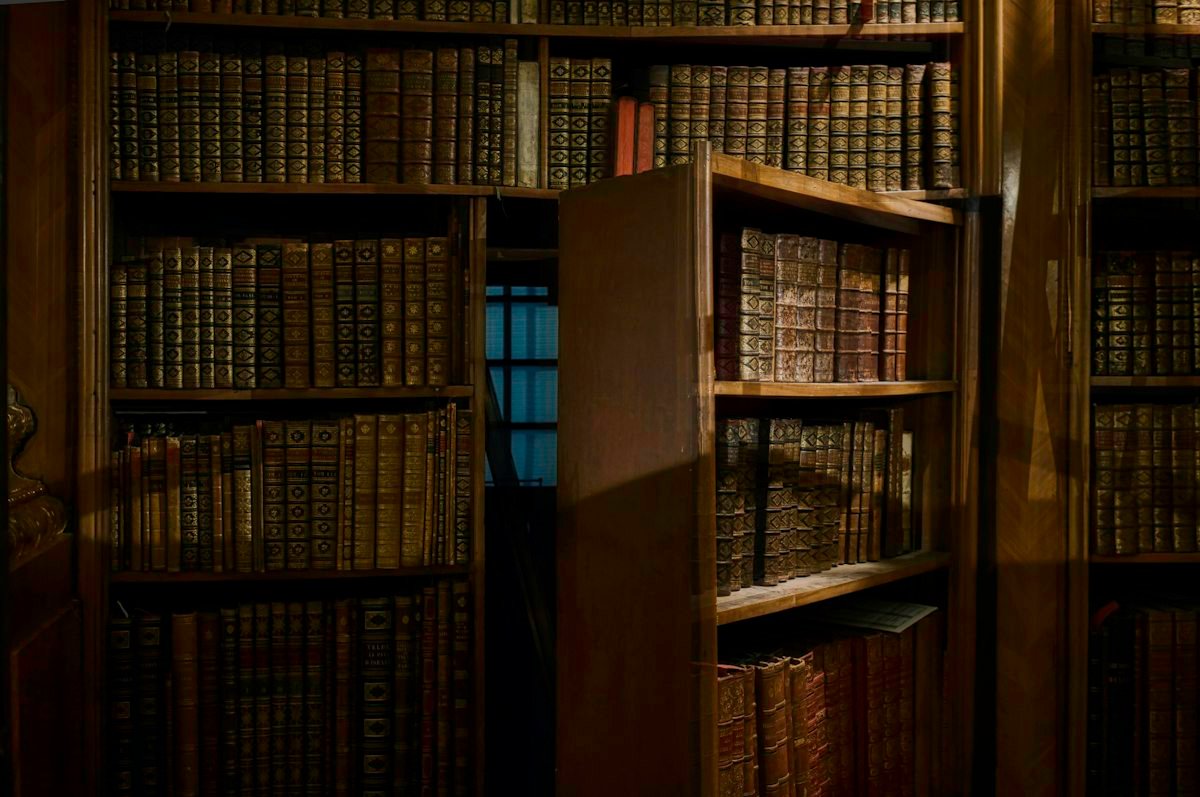
A fantasy library catalog is more than a shelf of impressive books. It is the system that tells a visitor whether a text exists, where it belongs, who can request it, and why someone might be denied access. Even a small monastery collection needs a way to remember what it owns. A vast magical archive needs those same answers on a larger scale, plus rules for damaged, dangerous, and disputed materials.
For worldbuilders, the useful question is not whether your setting invented modern library science. It is how an ordinary clerk finds a particular volume on a busy afternoon. Build that process first and the library will produce believable scenes, jobs, and mysteries without relying on a convenient secret room.
Decide what the institution actually collects
A city reading room might keep law codes, trade records, maps, and inexpensive copies of popular stories. A temple archive could preserve sermons, family registers, and ceremonial calendars. A wizard’s college may hold experiments, spell corrections, and reports of failed enchantments. Each collection serves a different audience. Write down its three most common requests before inventing a rare manuscript; the common requests explain why the institution has staff, opening hours, and funding.
Separate the collection from the building. A library can own volumes stored in a locked cellar, loaned to a distant scholar, or copied by a traveling scribe. That distinction matters when a visitor finds a catalog entry but not the object itself.
Give every item a stable shelf mark
You do not need a modern classification scheme. Choose a short, consistent code that workers can read aloud: H for histories, M for maps, and C for civic records, followed by a cabinet and item number. A record such as C–3–17 could mean the seventeenth civic document in cabinet three. A monastery might instead organize books by donor, language, or the room in which they were copied. The system need not be perfect, but it should be teachable to a new apprentice.
What happens when two copies share a title? Add a distinguishing note: red binding, winter edition, or annotated by Master Iven. Without those details, a mystery about a swapped manuscript is unfair because nobody could tell the copies apart.
Write a five-field catalog entry
A useful fantasy catalog can fit on one index card. Record the title or subject, author or origin, shelf mark, access status, and last known location. If the library uses a ledger instead of cards, keep the same information in columns. This makes missing books traceable without requiring the reader to understand a complicated filing system.
| Field | Sample entry |
|---|---|
| Title | The North Canal Survey, Third Copy |
| Origin | Surveyor Pell, Year of the Red Flood |
| Shelf mark | M–2–08 |
| Access | Reading room only; clerk present |
| Last location | Returned to map cabinet, fifth bell |
The entry answers the visitor’s immediate questions while leaving room for conflict. If the survey is absent, the clerk has a starting point: a named cabinet and a time when the book was last seen.
Choose lending rules based on risk and purpose
Not every book needs to leave the building. Ordinary primers might be borrowed for a week, while unique manuscripts stay under supervision. Some libraries permit copying but not removal. Others charge a deposit because replacing a handwritten volume takes substantial labor. Decide what happens when a borrower is late: a reminder, a fee, loss of borrowing privileges, or an appeal to a patron. Rules should create ordinary consequences before they become dramatic punishments.
Access is also political. Can a guild apprentice consult the same records as a council member? Are visitors required to name a sponsor? A city that advertises public knowledge but restricts land surveys has revealed something important about its rulers.
Account for copying, repairs, and preservation
Books and scrolls can be damaged by moisture, insects, rough handling, and fire. Assign space for repairs, dry storage, and the copying of fragile texts. The person who mends bindings may notice that a supposedly ancient page uses new thread. The apprentice who copies a legal charter may discover that a familiar name was omitted. These are natural sources of clues, not random riddles inserted into a room.
If magic protects the collection, specify its limits. Does a ward prevent flame but not damp? Does it preserve ink while leaving a reader free to tear pages? A magical safeguard that solves everything makes cataloging and preservation strangely unnecessary. The more interesting choice is deciding which risks the institution can afford to prevent.
Make restricted shelves understandable
Restricted access can protect privacy, dangerous instructions, sacred material, or documents still under legal dispute. Give each category a reason and a clear procedure. A clerk may require written permission from the donor’s family; a hazardous spellbook may be read only with a supervisor. Readers can challenge the policy, request an exception, or seek another source. Avoid making every refusal a sign of corruption. Sometimes the librarian has a legitimate duty to protect someone else’s information.
Worked example: the missing canal survey
Bellport’s civic library holds three copies of the North Canal Survey. The public copy is missing a foldout map, the council copy is locked away, and the annotated copy belongs to a retired surveyor. A dockworker needs to learn whether a new embankment will flood her street. The catalog points her to M–2–08, but the map cabinet contains an unmarked replacement. The clerk can show the borrowing ledger, yet cannot authorize the council copy without a signed request.
This is a usable story situation because the characters have choices. They can interview the last reader, petition for access, ask the retired surveyor, or examine the replacement binding. A missing object matters because the institution has records and rules, not because the GM announces that the book is mysteriously gone.
Five-minute library planning worksheet
- Name the institution’s three most requested kinds of text.
- Invent a shelf mark that a new worker could decode.
- Write one catalog entry for a valuable item.
- Choose who may borrow it, copy it, or only read it on site.
- Give the library one recurring maintenance problem and one fair appeals process.
- Decide which ordinary visitor is inconvenienced when a record is wrong.
Common mistakes to avoid
Do not make every librarian an all-knowing gatekeeper. Catalogs can be incomplete, employees can disagree, and a helpful worker may simply lack authority. Avoid treating every locked shelf as sinister; privacy and preservation are credible reasons for restrictions. Finally, keep the library connected to the wider town. Maps inform roads, legal records affect housing, and guild manuals influence apprenticeships. For those connections, explore our guides to fantasy postal systems, city housing and leases, and guild apprenticeships.
Frequently asked questions
Would a small fantasy village need a catalog?
Perhaps only a short inventory or a caretaker’s notebook. The method should match the collection’s size and how often people borrow from it.
Can a magical catalog be believable?
Yes. Decide who updates it, whether it tracks ownership or physical location, and how errors are corrected. A magical search tool still needs reliable information.
A library becomes memorable when finding knowledge requires a process that its workers understand. Start with one book, one record, and one person who needs it; the rest of the institution can grow from there.




One Comment