How to Make Travel Interesting in a TTRPG Without Random Encounters
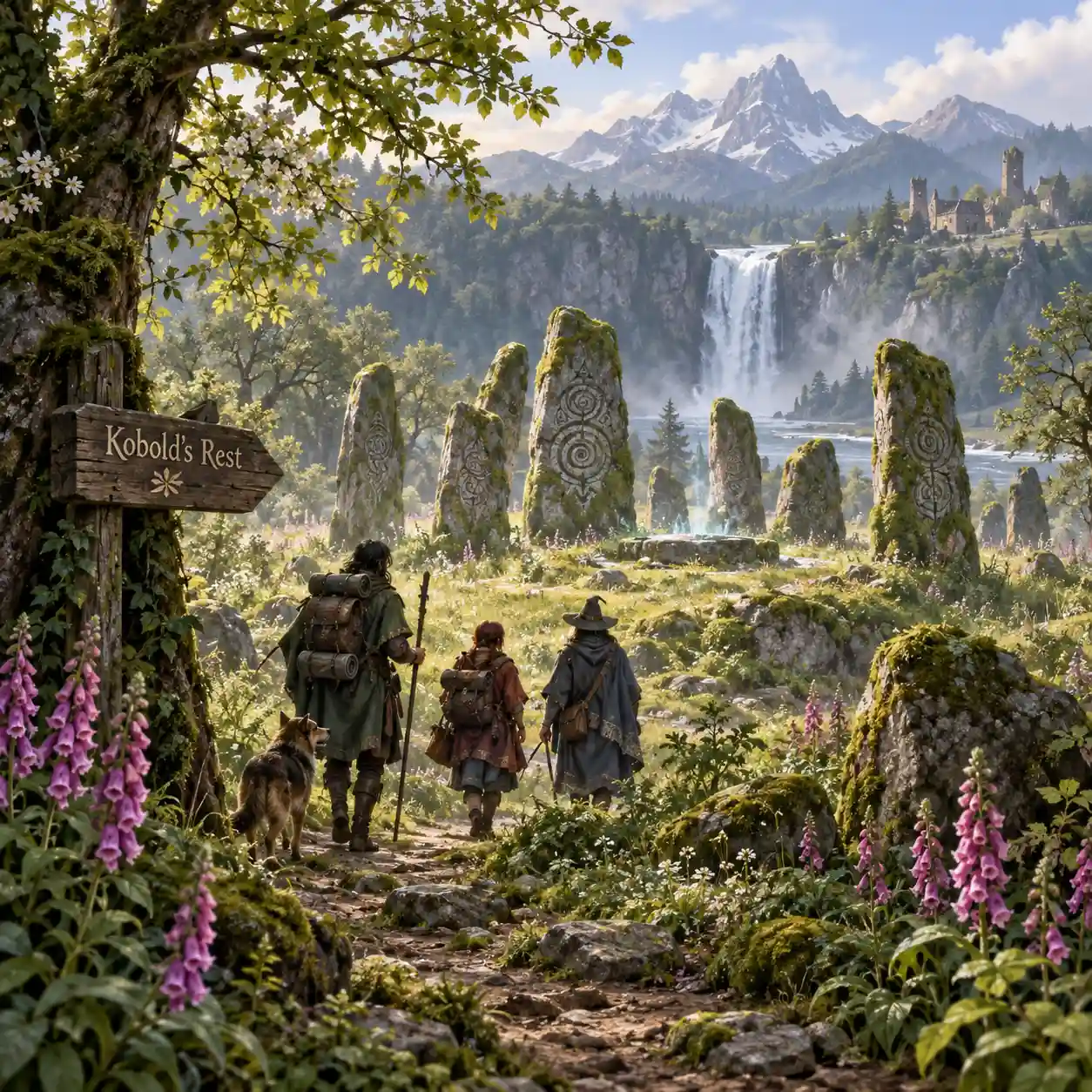
Making travel interesting in a TTRPG does not require a wandering-monster roll every six miles. The strongest journeys give players decisions to make, information to uncover, and consequences that change what happens next.
Travel works best when the road is part of the adventure rather than a loading screen between adventures. If nothing meaningful can happen, summarize it. If the journey matters, give the group something to decide.
Start With a Choice of Routes
A useful travel scene begins before anyone sets out. Give the party two or three routes with different costs. The old road may be fast but exposed. The river path may be safer but require a favor from a ferryman. The mountain trail may reveal forgotten ruins while risking bad weather.
The important part is not which route is objectively best. The point is that players can decide what kind of trouble they are willing to accept.
This works especially well with the approach in our guide to fantasy trade routes. Roads should exist for reasons. Merchants choose one route, pilgrims another, smugglers a third. Those reasons become adventures.
Give Everyone a Travel Job
Long journeys become more engaging when each character can influence them. Instead of asking for one generic survival check, let the party divide responsibilities.
- Navigator: chooses paths and notices shortcuts.
- Scout: spots danger, tracks movement, and finds campsites.
- Quartermaster: watches supplies, mounts, and equipment.
- Face: handles travelers, toll keepers, villages, and caravans.
- Lorekeeper: recognizes landmarks, old stories, and local customs.
You do not need special mechanics for every role. A role simply gives you a reason to ask a specific player, “What are you watching for?”
Use Discoveries More Often Than Fights
Random encounters often become random combats because combat is an easy event to prepare. But discovery usually does more worldbuilding.
A roadside shrine covered in fresh flowers tells the players something about local belief. A wagon abandoned with its cargo untouched suggests danger without explaining it. A bridge with three different sets of repairs hints at the history of the region.
A good travel discovery should do at least one of three things: reveal the world, create a decision, or point toward a future problem.
Let Failed Checks Change the Journey
Travel checks become dull when success means “you continue” and failure means “you cannot continue.” A more useful failure changes the situation.
The party still reaches the pass, but later than expected. They find water, but someone else is already camped there. They follow the correct road, but miss the safer crossing and arrive soaked and exhausted.
This is the same principle behind handling a failed Perception check: failure should move the game into a different situation, not stop the game.
Make Time Matter
Travel becomes tense when time has a visible cost. The group may be racing a storm, trying to arrive before a market closes, or deciding whether a two-day detour is worth investigating.
You do not need to threaten catastrophe every time. Small time pressures are often better. Missing a ferry, arriving after the inn has filled, or finding that a rival reached town first can make travel decisions matter without turning every journey into a crisis.
Zoom In Only When Something Changes
Not every mile deserves equal attention. Think of travel like a film edit.
Summarize the routine days. Slow down for decisions, discoveries, conversations, and changes in circumstance. Then speed up again.
This rhythm keeps travel from becoming either a montage with no agency or a week-long sequence of repetitive campsite scenes.
A Simple Travel Procedure
When you want a journey to matter, try this five-step loop:
- Offer a route choice.
- Ask each character what they are responsible for.
- Introduce one discovery or complication.
- Let the party make a meaningful decision.
- Show one consequence when they arrive.
That is enough for most journeys. You can repeat the loop for a long expedition, but you rarely need to run every day separately.
The Road Should Tell a Story
Interesting travel is not about filling distance with events. It is about showing the players what kind of world lies between the dots on the map.
If the journey gives them choices, reveals something they did not know, and changes the situation at the destination, the road has done its job.






3 Comments