How to Run a Split Party Without Leaving Players Bored
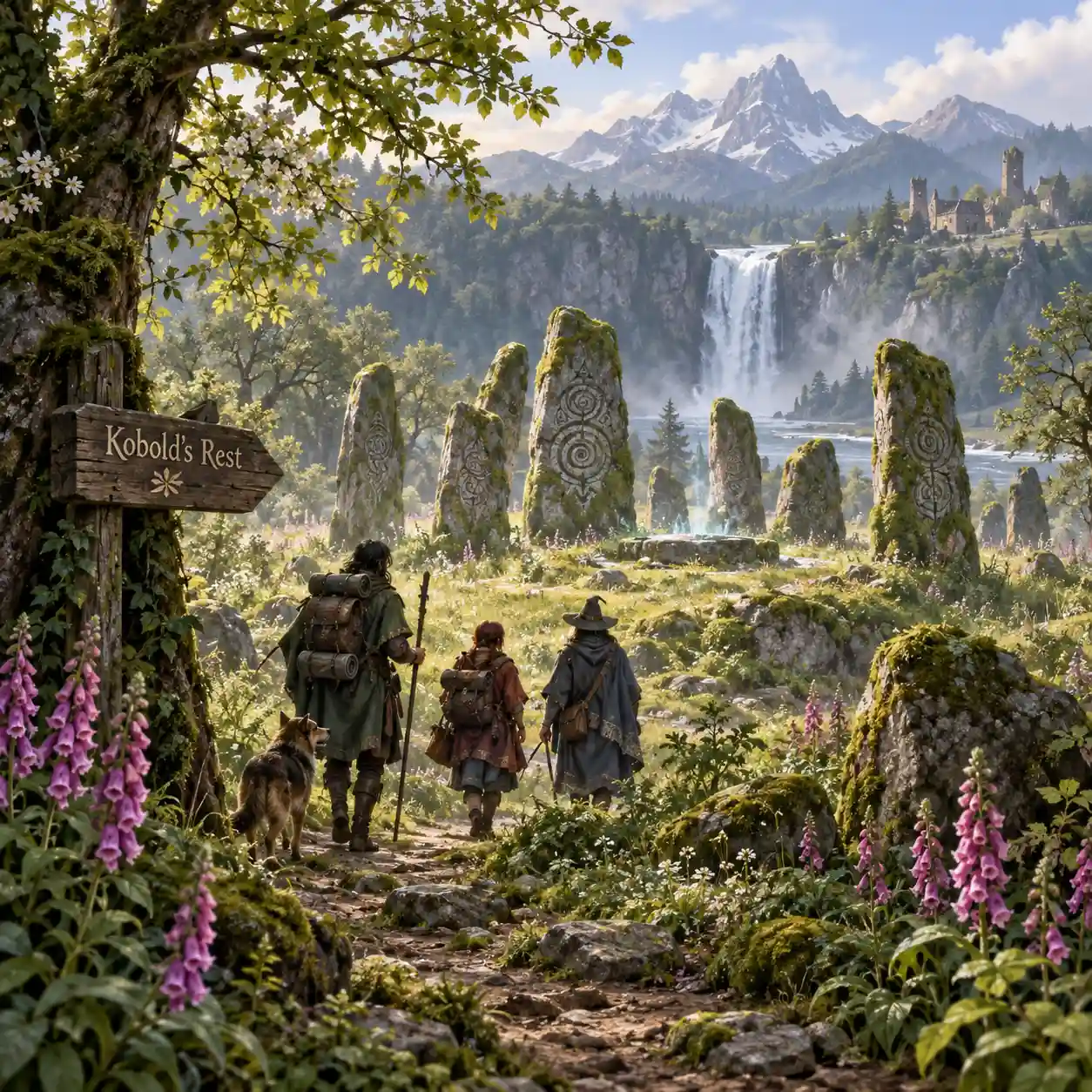
“Never split the party” is good survival advice inside many games, but it is not always good table advice. Players split up because it makes sense: one character follows a suspect, two others question a witness, and someone else checks the old shrine before sunset. The real problem is not separation. The problem is making half the table wait too long while the other half plays.
If you are wondering how to run a split party in a TTRPG, think like an editor rather than a traffic controller. Your job is not to finish one group’s entire scene before moving to the next. Your job is to cut between scenes at the moments when attention is highest.
Split the spotlight, not just the characters
A split party creates multiple active scenes. Treat each scene as one strand of the same episode. Let a group make a meaningful choice, reveal a useful detail, or encounter a new complication. Then cut away before the scene fully resolves.
That keeps the off-screen players curious instead of passive. It also gives the players in the current scene a moment to think about what they will do next.
A simple rhythm is: question, decision, consequence, cut. You do not need to switch every two minutes, but you should avoid letting one branch consume twenty or thirty minutes unless everyone at the table is still engaged.
Cut on a decision, not in the middle of confusion
The best time to switch scenes is usually after a player understands the immediate situation but before the outcome is settled.
For example: “The guard looks at the forged seal, then at you. He reaches for the bell rope. What do you do?” Let the player state the action, perhaps make a roll, and then cut to the other group before narrating the full result.
That creates a natural cliffhanger without feeling artificial. For more on preserving uncertainty without giving away the answer, see how to foreshadow in a TTRPG without spoiling the twist.
Give every branch something that matters
A split party becomes frustrating when one group is doing the “real plot” while another shops for rope. If the characters have chosen different goals, look for ways each branch can produce something meaningful: information, an ally, a cost, a new problem, or a choice that changes what happens next.
Meaningful does not mean equally dangerous. A conversation with a baker can matter as much as a chase if the baker reveals who has been buying food for the supposedly abandoned manor.
Use shorter scenes when the group is larger
Two branches are easy to manage. Three or four require tighter cuts. If five players split into three locations, do not try to run each location as a complete mini-session. Give each branch a small beat and rotate.
- Branch A gets a clue and chooses whether to pursue it.
- Branch B meets resistance and decides whether to push or retreat.
- Branch C discovers something unexpected and chooses who to tell.
Then return to A. The table begins to feel like everyone is moving at once, even though you are handling one conversation at a time.
Let off-screen players help without controlling the scene
Some groups enjoy giving off-screen players temporary NPCs, enemies, bystanders, or environmental details to portray. This can work well if the main player still owns their character’s choices.
Do not force this technique on people who prefer to watch. Sometimes listening to another branch is entertaining on its own, especially when players know information their characters do not.
Do not punish the split just because it happened
If every separated character immediately meets an encounter balanced for the entire party, players learn that splitting up is not a story choice; it is a trap laid by the GM.
Danger can still happen, but scale it to the fiction. A lone rogue following a suspicious courier might face a tense tailing scene rather than six enemies. Two characters exploring a ruin might discover evidence that tells them they should leave instead of being locked into a fight they cannot reasonably survive.
This follows the same principle as letting the world move when players ignore a quest. Consequences should grow from the situation, not from the GM trying to force a preferred path. You can explore that idea further in what to do when players ignore the main quest.
Use communication limits carefully
When characters are apart, players often know things their characters do not. That is usually fine. You do not need to send half the table out of the room just to preserve perfect information boundaries.
Instead, trust players to separate player knowledge from character action. If a group wants a more immersive style, establish a simple rule: characters can only act on information they have received in the fiction, but players are allowed to enjoy watching every scene.
Reunite the party through shared pressure
Do not make reunion a chore. Give separated characters reasons to converge: the same bell rings across town, a storm closes the streets, both groups learn about the same destination, or one branch sends a message asking for help.
The best reunions also let players compare discoveries. One group may have learned who committed the crime while another discovered why. When they meet again, the information suddenly becomes more useful because the players created it in separate scenes.
A simple split-party checklist
- Keep each scene focused on one immediate goal.
- Cut after a decision or revelation.
- Rotate before anyone waits too long.
- Give every branch a meaningful change.
- Do not automatically punish separation with oversized danger.
- Let players watch scenes their characters are not in unless your group prefers otherwise.
- Create a natural reason for the threads to meet again.
A split party does not have to slow the game down. Handled with short scenes and purposeful cuts, it can make a session feel faster, broader, and more alive. The goal is not to prevent characters from separating. It is to make sure the players never feel abandoned when they do.



One Comment