How to Write Nonhuman Point of View in Fantasy
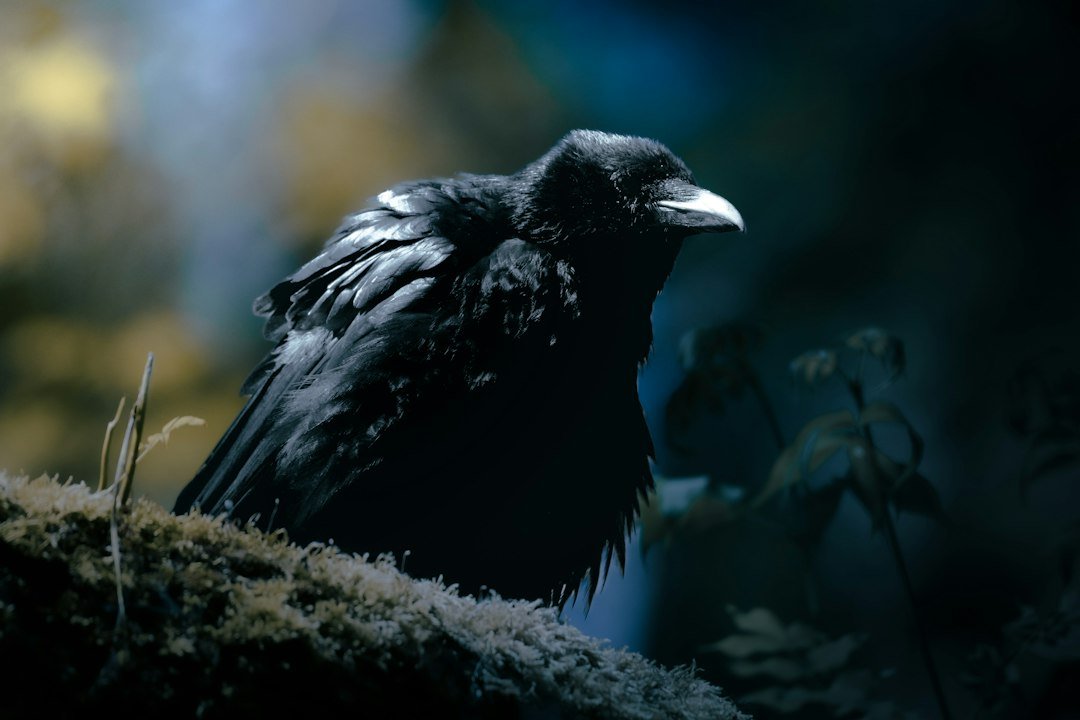
To write a convincing nonhuman point of view in fantasy, change what the narrator notices, values, misunderstands, and can physically do—not merely the names of its body parts. A raven, sentient tree, river spirit, or invented creature should interpret events through a distinctive way of living. Readers still need recognizable motives and a clear scene, but they should not feel that a modern human is wearing feathers.
Begin with a mind, not a species label
Before drafting, give your narrator a specific immediate goal. A raven wants to recover a hidden bright object before the rain. A stone guardian wants to protect the last warm room in an abandoned tower. A river spirit wants a new bridge built without sealing off its spring. These goals are understandable, but the routes to achieving them need not be human.
Then identify three priorities shaped by the creature’s circumstances. A bird may notice high perches and approaching movement before decorative clothing. A long-lived tree might measure change in seasons and root damage rather than minutes. An artificial guardian might distinguish permitted from forbidden actions while struggling with ambiguous requests. These are writing choices, not claims that all members of a real species think alike.
Design a sensory hierarchy
Every scene contains more information than any viewpoint character can process. Choose which signals matter first. For a fictional raven narrator, you might emphasize glints, movement, air currents, and the location of familiar hiding places. For a cave-dwelling creature, vibrations and temperature might dominate. A magical being may sense promises or memories, but those abilities need rules and limits.
Write a quick sensory inventory with four columns: stimulus, narrator’s interpretation, action, and blind spot. For example, a window reflects sunlight; the raven interprets the glitter as a possible object to collect; it approaches the glass; it fails to notice the person waiting inside. The blind spot makes the perspective useful for plot. It also prevents magical perception from becoming an all-purpose explanation.
Avoid stacking every sensory detail into a single paragraph. Select the two that affect the narrator’s next choice. The principle is similar to our advice on describing fantasy weather through scene action: details earn their place when they change mood, behavior, or consequence.
Give the narrator a different scale of importance
Human narrators often organize scenes around conversation, social status, and long-term plans. Your nonhuman narrator might care more about territorial boundaries, a pattern of warmth, the safety of a clutch, or the continuity of an old oath. A coronation could be remembered as the day every rooftop filled with dangerous banners. A war could be a disruption in the supply of food scraps. Neither interpretation needs to be silly; both can reveal the world from an unexpected angle.
Ask what the narrator would consider an insult, a treasure, a threat, and a home. Do not make all four answers unfamiliar. One recognizable emotional anchor helps readers connect. The narrator may value loyalty or fear abandonment, but express those feelings through an action suited to its body and culture.
Limit knowledge to what the viewpoint can discover
A nonhuman viewpoint becomes less believable when it understands every human institution on sight. A raven perched outside a courthouse might know the clerk’s face and daily routine but not the meaning of a sealed warrant. It can observe who enters, which objects change hands, and how people react. It cannot accurately narrate private motives unless the story establishes a way to know them.
This is a general point-of-view discipline as much as a fantasy technique. Keep observations separate from conclusions. A character may infer that a traveler is frightened because their hands shake, but that inference can be wrong. Misinterpretations create mystery without requiring the narrator to be foolish.
Build vocabulary around experience
You do not need to invent an unreadable grammar to make a voice distinctive. Use familiar language with selective metaphors. A raven might call a bell tower the loud stone tree; a river spirit might refer to a bridge as a shadow that never moves. Choose a handful of recurring concepts, then let ordinary prose carry the rest. If every noun becomes an elaborate riddle, readers will spend more energy decoding than caring.
Pay attention to verbs. A winged narrator can circle, tilt, coast, cling, and drop. A rooted narrator may press, drink, split, shelter, or wait. Repeated action verbs remind readers of the body without constant exposition. Avoid assuming that the narrator’s voice must be childish, primitive, or morally simple. A being can have a sophisticated mind while using an unfamiliar frame of reference.
Worked example: the raven and the letter
Consider a fictional raven called Sable, who keeps objects in a crack behind a clock tower. A human-focused opening might read: Sable saw the mayor hide a letter and realized it was evidence of corruption. That sentence gives the bird knowledge the scene has not earned and describes a human political judgment.
A closer nonhuman version reads: The red-coated one pushed a white square beneath the loose roof tile. Sable watched the hand withdraw. The square stayed. It would fit behind the clock face, beside the silver button and the blue bead. Then the red-coated one struck the tiles with a stick, and Sable rose above the chimney smoke.
This version presents the letter as an object, not yet a legal clue. The bird wants to take it, notices danger, and retreats. Later, a human character may recognize the letter’s significance. The narrator’s limited understanding creates a fair information gap. You can use a similar method when designing lost-letter plot hooks, where an object’s movement matters more than an immediate explanation.
Add emotional stakes without humanizing every thought
Suppose Sable’s cache is destroyed during repairs. A human narrator might describe the loss as a violation of property. Sable can instead return to the familiar gap, find it sealed with fresh mortar, and search the ground for the missing blue bead. The sequence communicates distress through repeated behavior and the value of particular objects. Readers infer the feeling without needing a direct declaration.
For a long story, let the narrator change. Perhaps Sable initially collects anything bright but learns to carry one dull scrap of paper because it brings a trusted human back to the tower. That is an emotional arc expressed through altered priorities. The character remains nonhuman while gaining complexity.
A five-part nonhuman POV planning card
Body: What movement or action is easy, and what is difficult? Attention: What three details does the narrator notice before a human would? Values: What is worth protecting or pursuing? Blind spot: What familiar human custom does the narrator misunderstand? Change: What new understanding will the narrator earn through action? Keep the card beside your draft and revise it when the narrator’s choices contradict it.
For another angle on how nonhuman protagonists reshape a reader’s expectations, browse our fantasy books with nonhuman protagonists. When studying published fiction, focus on how perception affects the plot rather than borrowing distinctive phrases or character traits.
Revision exercise: one event, two minds
Write 150 words about a traveler entering a ruined chapel from a human viewpoint. Include the traveler’s purpose and one fear. Then rewrite the same event from the perspective of a creature living in the rafters. Do not add new plot events. Change only what is noticed, how the traveler is described, and why the moment matters. Underline three details that appear in only one version.
On a final pass, circle every sentence that explains what another character secretly thinks. Replace unsupported certainty with an observable clue or remove it. Next, highlight every comparison that depends on modern human culture. Keep those that your creature could plausibly know; revise the rest. Finally, read the scene aloud. If the voice is exhausting after one page, simplify the vocabulary and preserve the distinctive priorities.
Frequently asked questions
Can a nonhuman narrator use ordinary English?
Yes. Translation into readable prose is a storytelling convention. A few consistent choices about imagery, attention, and assumptions can convey difference more effectively than invented words in every sentence.
Does a nonhuman character need to misunderstand humans?
No. Misunderstanding is one useful tool, not a requirement. A long-lived or socially integrated being may understand human customs well while valuing entirely different things. Give it at least one meaningful perspective readers could not get from a typical human narrator.