D&D Campaign Log Example: When a Failed Plan Makes the Story Better
Some of the best campaign sessions begin with a plan that does not work. The important question is what happens afterward. If failure simply means “nothing happens, try again,” the session stalls. If failure changes the situation, the campaign gains new material.
This D&D campaign log example continues The Lanterns of Blackfen and focuses on a failed plan that creates a better next problem. The recap records the intention, the complication, the consequence, and the new choice.
Previously in Blackfen
During the downtime-session recap, the party learned that a vessel called the Harrow Fen may still be connected to the hidden bell network. They also promised Mara they would search for her missing son before following other leads.
They set out into the deep marsh aboard Pell’s old ferry boat with a simple plan: follow the old navigation markers, find the route once used by the Harrow Fen, and stay unnoticed.
The plan
The party decided to travel without visible lanterns during daylight and stop before dusk. Lio would use copied survey symbols to identify old safe-sounding posts. Nessa would watch the banks for recent traffic. Pell would steer.
The plan depended on one assumption: the old markers still described the safest route.
They did not.
The first sign something is wrong
At midday, Pell noticed the water becoming shallower where the map showed a deep channel. Years of sediment had shifted the route.
The party could turn back or continue slowly by testing depth ahead of the boat. They chose to continue because the next marker was visible in the distance.
This is worth recording because it is the decision that made the later problem possible. Failure feels arbitrary when a recap preserves only the bad result and not the choice that led there.
The failed approach
The boat became stuck on a mud shelf roughly two hundred yards from the old marker. Freeing it took long enough that the group could no longer reach safe ground before dusk.
More importantly, the noise drew attention.
A second boat appeared from behind a reed island. It did not approach. It simply watched.
Nessa tried to signal that they were ordinary travelers. The other boat turned away and disappeared north.
The party immediately realized their “unnoticed” approach had failed.
Failure changes the situation
The group could still continue the search, but now someone knew they were in the marsh. They chose to abandon stealth and move quickly toward the nearest dry platform marked on the old survey.
When they arrived, they found the platform recently used. A fire pit was still warm, and someone had left a strip of blue cloth tied around a post.
Taren recognized the cloth.
Mara had used the same blue fabric to repair her son’s work coat.
The failed plan creates a stronger lead
If the stealth plan had worked perfectly, the party might have followed the old route for another day before finding evidence. Instead, getting stuck forced them to stop at a place they otherwise would have passed.
The failure did not secretly “reward” them. It created a different path with a cost: their presence was now known. The new clue mattered because it arrived through the changed situation.
The second consequence arrives
Near midnight, a bell rang once across the marsh.
Then another answered behind them.
The party understood the implication immediately. The hidden network was active, and the watchers had probably reported them.
Rather than flee, the group made a new plan: leave the ferry tied to the platform, continue on foot along a raised maintenance path, and follow the bell sequence north.
Where the session ends
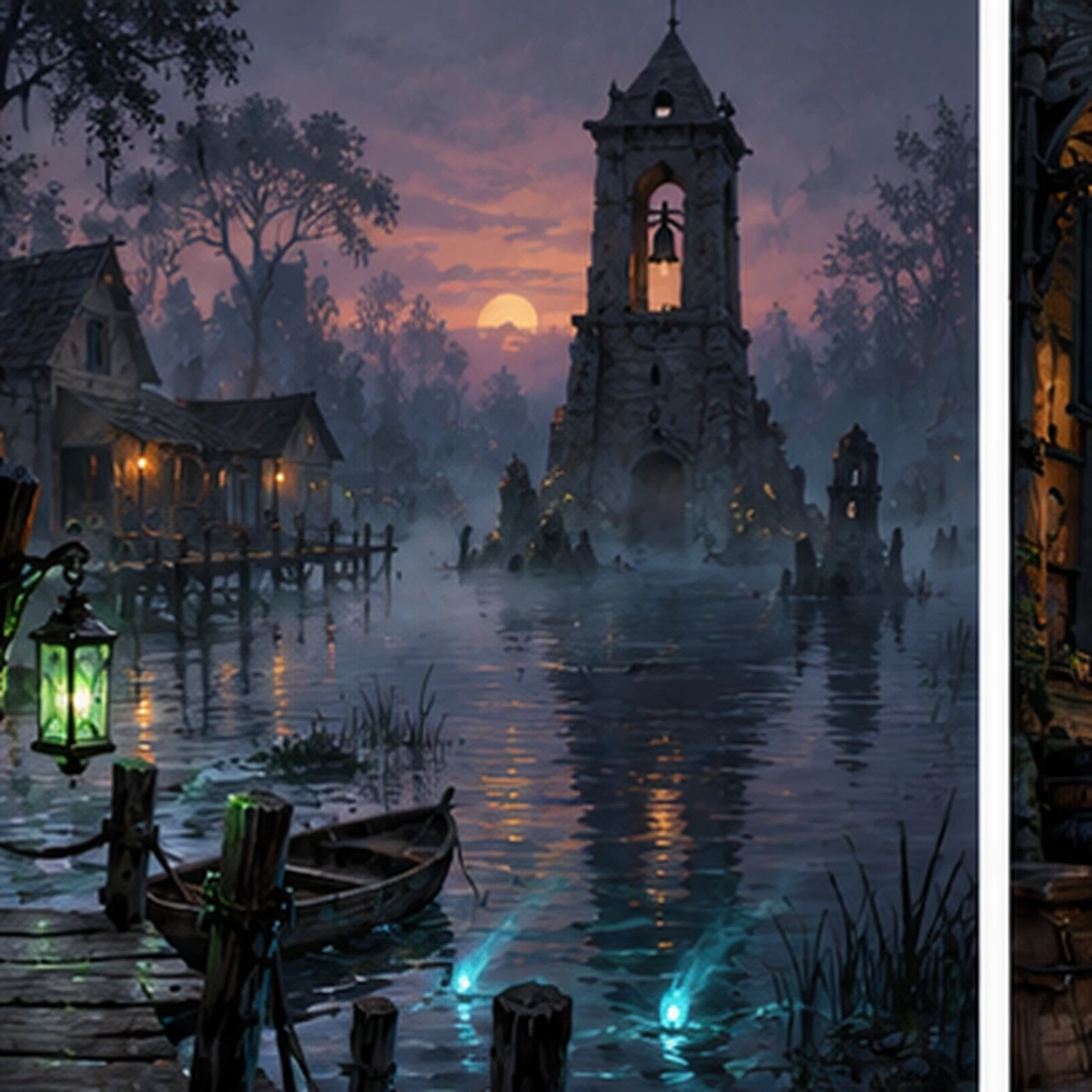
The maintenance path led to an old signal tower surrounded by water. No light showed in its windows.
At the base of the tower, someone had scratched four fresh words into the wood:
Mara, I am alive.
The session ended there.
What the recap records
- Original plan: follow old navigation markers and stay unnoticed.
- Bad assumption: the old safe route had shifted over time.
- Failure: the boat became stuck and attracted attention.
- Cost: an unknown group now knows the party entered the marsh.
- New clue: blue cloth matching Mara’s son’s coat was found at a recent campsite.
- Escalation: the bell network became active after the party was spotted.
- New goal: reach the signal tower and determine who left the message.
How to recap a failed plan well
Do not write only “the plan failed.” Record what the players intended, which assumption broke, and what changed because of it. This keeps failure connected to agency.
A strong failed-plan recap often has four beats:
- The party makes a reasonable plan.
- Something in the world complicates an assumption.
- The group chooses how to respond.
- The new situation creates consequences and opportunities.
Failure should move, not erase, the story
Players do not need every plan to succeed for their choices to matter. They need the game to respond in ways that create new decisions.
A failed stealth approach can alert a faction. A missed meeting can change who gets there first. A rejected bargain can create a rival. The campaign moves sideways instead of stopping.
That is why failed plans often become memorable campaign logs: they show the moment the table stopped following its expected route and discovered a story nobody had planned in advance.